Copyright: Attribution Non-Commercial ShareAlike (BY-NC-SA)
Available Formats: Download as PDF, TXT or read online from Scribd
Available Formats: Download as PDF, TXT or read online from Scribd
The Baku Ateshgah, often called the "Fire Temple of Baku", is a religious temple located in a suburb in Baku, Azerbaijan. "Ātash" (آتش) is the Persian word for fire.
The complex, which has a fire altar in the middle, was built during the 17th and 18th centuries. A vent from a subterranean natural gas field located directly beneath the complex fed the fire. The temple ceased to be a place of worship after 1883, with the installation of petroleum plants. The natural eternal flame went out in 1969, after nearly a century of exploitation of petroleum and gas in the area. Today, gas piped in from Baku feed the fires and the fires are only turned on for the benefit of visitors.
 |
| Attribution: painter from Brockhaus and Efron Encyclopedic Dictionary (between 1890-1907), Public domain, via Wikimedia Commons |
 |
| Attibution: Wikifex, CC BY-SA 3.0 <https://creativecommons.org/licenses/by-sa/3.0>, via Wikimedia Commons |
Source:
En.wikipedia.org. n.d. Ateshgah of Baku - Wikipedia. [online] Available at: <https://en.wikipedia.org/wiki/Ateshgah_of_Baku> [Accessed 16 August 2022].
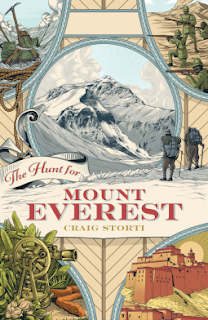
The doom of Everest is sealed, for the simple and obvious reason that man grows in wisdom and stature, but the span of mountains is fixed … This doom can be seen to be relentlessly closing in on Everest.
I never have gone back to my homeland because I feel it is cursed. My ancestors arrived in the Solo-Khumbu region fleeing from persecution in the lowlands. There they found sanctuary in the shadow of 'Sagarmathaji'* …In return they were expected to protect that goddesses’ sanctuary from outsiders. …But my people went the other way. They helped outsiders find their way into the sanctuary and violate every limb of her body by standing on top of her, crowing in victory, and dirtying and polluting her bosom. … even the Sherpas are to blame for the tragedy of 1996 on 'Sagarmatha.' I have no regrets of not going back, for I know the people of the area are doomed, and so are those rich, arrogant outsiders who feel they can conquer the world."
Sources (Harvard style)
Krakauer, J., 1997. Into thin air: a personal account of the Mount Everest disaster. 1st ed. New York: Anchor Books.
Storti, C., 2021. The Hunt for Mount Everest. Nicholas Brealey Publishing.
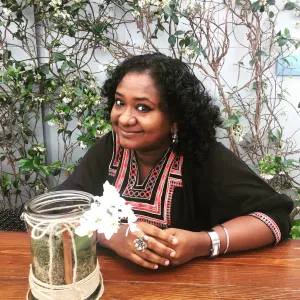 |
| Vidya Balachander |
(Sigh) Another example of injecting caste into everything. As a friend said:
Mix caste into every Indian narrative as "masala " to be served in food for western audiences... Tired of these folks who spin these theses endlessly :-(
This is a beautifully written piece exploring the spice. The writer strikes an intriguing balance between her personal experience and history, anthropology and politics. A fantastic piece combining in-depth research and skillful writing.
References:
American Society of Journalists and Authors. (2021). ASJA > For Writers > ASJA's Annual Writing Awards. Asja.org. Retrieved 15 July 2021, from https://asja.org/for-writers/annual-writing-awards.
Balachander, V. (2021). Asafoetida’s Lingering Legacy Goes Beyond Aroma — Whetstone Magazine. Whetstone Magazine. Retrieved 15 July 2021, from https://www.whetstonemagazine.com/journal/asafoetidas-lingering-legacy-goes-beyond-aroma.
The boundary dispute between Assam and Mizoram dates back nearly 150 years. Boundary demarcations in 1875 and 1933, particularly the latter, are at the heart of the dispute. The 1933 boundary was made without consent and approval of government authorities and the people of Mizoram. The boundary dispute has simmered since Mizoram became a Union Territory in 1972 and then a state in the 1980s.

The dispute between Assam and Mizoram has recently escalated, as firing on the boundary left at least six Assam police dead and over 50 others injured.While Assam claims that its boundary has been transgressed, Mizoram cites unilateral moves by Assam inside its territory.
Following a meeting with Union Home Minister Amit Shah, Mizoram wants “the inter-state border issue with Assam be resolved in an atmosphere of peace and understanding". Twenty-four hours after the meeting, however, people are unable to travel through the border areas between Assam and Mizoram by vehicle. Mizoram blames Assam for blocking the road. According to Assam, Assam withdrew its travel advisory and nobody is being stopped from travelling to Mizoram.
Sources:
Deb, D. (2021). Explained: Why did a 150-year-old Assam-Mizoram dispute get violent now? The Indian Express. Retrieved 7 August 2021, from https://indianexpress.com/article/explained/the-assam-mizoram-dispute-violence-policemen-dead-7425600/.
Purkayastha, B. (2021). Bonhomie after Assam-Mizoram talks yet to reflect at border points. Hindustan Times. Retrieved 7 August 2021, from https://www.hindustantimes.com/india-news/bonhomie-after-assam-mizoram-talks-yet-to-reflect-at-border-points-101628280061118.html.
