Thursday, August 22, 2024

Bias at the BBC

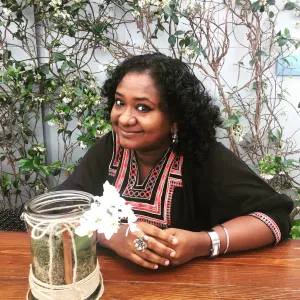
 This lady is Samira Hussain, South Asia correspondent to the BBC. She recently gave a report on “false” videos on the plight of Bangladeshi Hindus.

Here's the email that I sent to Ms. Hussain. 

Hello from the United States of America. My local radio station WAMU 88.5 broadcasts the BBC World Service overnight and the BBC Newshour in the mornings.

I listened to your report on “false” videos on the plight of Bangladeshi Hindus with interest and ultimately concern. Your report was intended to minimize the plight of Bangladeshi Hindus. While you did have a throwaway line that Bangladeshi Hindus were being persecuted, that is not enough. You should give a report on what Hindus are suffering in Bangladesh, rather than a report on “false” videos.

I have copied the BBC World Service on this email. I have also copied organizations and individuals that might help you put together a report on the plight of Bangladeshi Hindus.

Those copied on the email were:

Not surprisingly, Ms. Hussain did not respond to my email. Of those who were copied on this email, only Richard Benkin, a longtime advocate for Bangladeshi Hindus, replied. He wrote:

I'm heading out to Bengal soon. Things are horrible there for Hindus who are facing an existential threat.

Tuesday, April 09, 2024

Happy Ugadi

Ugadi is New Year's Day according to the lunisolar Hindu calendar.  In 2024, it was celebrated on Tuesday, April 9, according to the Gregorian calendar.

Hindus in Andhra Pradesh, Telangana, Karnataka and Goa celebrate Ugadi. They celebrate Ugadi with colorful patterns on the floor called Muggulu/Rangoli, mango leaf decorations on doors, buying and gifts such as new clothes, charity to the poor, oil massages followed by special baths, and visits to Hindu temples. Mango leaves and coconuts are considered auspicious in the Hindu tradition.

Pachadi

A special food prepared on Ugadi called pachadi combines sweet, sour, salty, bitter, astringent and piquant flavors. In Telugu and Kannada Hindu traditions, it reminds one to that the upcoming year will consist of not just sweet experiences, but also unpleasant episodes. Just as the different flavors are mixed together, no event or episode is wholly good or bad.

Ugadi is celebrated on the first day of the Hindu lunisolar calendar month of Chaitra.  This typically falls in late March or early April of the Gregorian calendar. Ugadi is New Year according to the lunisolar calendar, which considers both the position of the Moon and the position of the Sun to divide the year into months and days.


The counterpart of the lunisolar calendar is the solar calendar, which considers only the position of the Sun to divide the year into months and days. Because of that, Hindu New Year is celebrated twice in the year at two different times. In 2024, Hindu New Year based on the solar calendar is April 13, according to the Gregorian calendar.

Sources:

2024 Hindu Festivals Calendar, Hindu Tyohar Calendar  for Manassas, Virginia, United States. (n.d.). Drikpanchang. Retrieved April 9, 2024, from https://www.drikpanchang.com/calendars/hindu/hinducalendar.html

Wikipedia contributors. (2024, April 10). Ugadi. Wikipedia. https://en.wikipedia.org/wiki/Ugadi


Tuesday, March 26, 2024

Mosque being built on land of Kantajew Temple in Dinajpur, Bangladesh

 News about a terracotta temple in Bangladesh that I visited:


Hossain, M. F. (2024, March 23). Mosque being built on land of Kantajew Temple in Dinajpur. Dhaka Tribune. https://www.dhakatribune.com/bangladesh/nation/342502/minority-rights-group-urges-pm-s-intervention-to

HT

Spencer, R. (2024, March 25). Bangladesh: Mosque being built on land of historic Hindu temple. Jihad Watch. https://www.jihadwatch.org/2024/03/bangladesh-mosque-being-built-on-land-of-the-historic-hindu-temple


Sunday, March 10, 2024

Mt. Kailash: origin of the rivers of India

I've posted about Tibet several times on this blog. I found this interesting post via Facebook:


Friday, March 08, 2024

Shubh Mahashivaratri

HT Sahana Singh

The naga Vasuki served as the churning rope. The asuras held his head and the gods held his tail. When Vasuki vomited poison that threatened to fall into the ocean and contaminate the amrita, Shiva took it and held it in his throat, which turned his throat blue.


Tuesday, December 26, 2023

YouTube steers me away from relevant "convert to Hinduism" results

I searched YouTube for convert to Hinduism: instead, I got a lot of results for conversion from Hinduism to another religion:


I filed a complaint with YouTube, although I don't expect any reply.  It's a long shot, but I'm going to refer this to Sundar Pichai.


Friday, October 27, 2023

A dictionary of names and terms in the Mahabharata

This is a dictionary of names and terms in the great Indian epic the Mahabharata. I compiled the vocabulary in Microsoft Excel. Devanagari script was transliterated into "romanized" script using the International Alphabet of Sanskrit Transliteration (IAST). I inserted a pivot table to  put the content into a dictionary format. I saved the file as PDF, which was uploaded to Scribd. 

Copyright: Attribution Non-Commercial ShareAlike (BY-NC-SA)

Available Formats: Download as PDF, TXT or read online from Scribd

Names and Terms in the Maha... by thebahuofbengal

Tuesday, August 16, 2022

The "Fire Temple" of Baku, Azerbaijan

 The Baku Ateshgah, often called the "Fire Temple of Baku", is a religious temple located in a suburb in Baku, Azerbaijan. "Ātash" (آتش) is the Persian word for fire.

The complex, which has a fire altar in the middle, was built during the 17th and 18th centuries. A vent from a subterranean natural gas field located directly beneath the complex fed the fire. The temple ceased to be a place of worship after 1883, with the installation of petroleum plants. The natural eternal flame went out in 1969, after nearly a century of exploitation of petroleum and gas in the area. Today, gas piped in from Baku feed the fires and the fires are only turned on for the benefit of visitors.

Attribution: painter from Brockhaus and Efron Encyclopedic Dictionary (between 1890-1907), Public domain, via Wikimedia Commons

Persian and Indian inscriptions suggest that the temple was used as a Hindu, Sikh, and Zoroastrian place of worship.  Inscriptions on the Ateshgah are in either Sanskrit (in Nagari Devanagari script) or Punjabi (in Gurmukhi script), with the exception of one Persian inscription. Below is an inscription in Sanskrit from the temple that I used as a cover for my course in Sanskrit.

Attibution: Wikifex, CC BY-SA 3.0 <https://creativecommons.org/licenses/by-sa/3.0>, via Wikimedia Commons

In 1925, Zoroastrian priest and academic Jivanji Jamshedji Modi went to Baku to determine if the temple had been once a Zoroastrian place of worship. Modi observed that after examining this building with its inscriptions, architecture, etc., any Parsee who is familiar with Hinduism or Sikhism and their temples and their customs would conclude that this is not a [Zoroastrian] Atash Kadeh but a Hindu Temple.  The trident (Trishula) mounted atop the structure is a distinctly Hindu sacred symbol.

Source:

En.wikipedia.org. n.d. Ateshgah of Baku - Wikipedia. [online] Available at: <https://en.wikipedia.org/wiki/Ateshgah_of_Baku> [Accessed 16 August 2022].


Sunday, July 03, 2022

Review of The Hunt for Mount Everest

My rating: 4 of 5 stars ⭐⭐⭐⭐

The Hunt for Mount Everest

The Hunt for Mount Everest documents the 70 year history from the measurement of Mt. Everest in 1850 to the expedition in 1921, when westerners came closest to Mt. Everest, about 40 miles. It would be another 30 years until George Mallory and Tenzing Norgay reached the summit of Mount Everest. 

After the 1921 expedition, explorer Francis Youngblood wrote: 
The doom of Everest is sealed, for the simple and obvious reason that man grows in wisdom and stature, but the span of mountains is fixed … This doom can be seen to be relentlessly closing in on Everest.
Out of all the passages in The Hunt for Mount Everett, this one haunted me most. 

Into Thin Air: A Personal Account of the Mount Everest Disaster by Jon Krakauer documents the 1996 Mount Everest disaster. After a surprise snowstorm, six climbers didn’t make it back to their camp. When the storm finally passed, five of them were dead and the sixth climber was so badly frostbitten that his right hand had to be amputated. In the epilogue, Krakauer quoted a Sherpa orphan who lost his parents on climbing expeditions:
 I never have gone back to my homeland because I feel it is cursed. My ancestors arrived in the Solo-Khumbu region fleeing from persecution in the lowlands. There they found sanctuary in the shadow of 'Sagarmathaji'* …In return they were expected to protect that goddesses’ sanctuary from outsiders. … 

But my people went the other way. They helped outsiders find their way into the sanctuary and violate every limb of her body by standing on top of her, crowing in victory, and dirtying and polluting her bosom. … even the Sherpas are to blame for the tragedy of 1996 on 'Sagarmatha.' I have no regrets of not going back, for I know the people of the area are doomed, and so are those rich, arrogant outsiders who feel they can conquer the world." 
Both these passages refer to doom, but while Younghusband views doom positively in terms of man’s growing “wisdom and stature,” the Sherpa orphan views it negatively in terms of desecrating ‘Sagarmatha.’ 

* Literally, the mother of the oceans. I like this name better, as many of the great rivers of Asia originate in the Himalayas

Sources (Harvard style)

Krakauer, J., 1997. Into thin air: a personal account of the Mount Everest disaster. 1st ed. New York: Anchor Books.

Storti, C., 2021. The Hunt for Mount Everest. Nicholas Brealey Publishing.

Is hing casteist?

Vidya Balachander

(Sigh) Another example of injecting caste into everything. As a friend said:

Mix caste into every Indian narrative as "masala " to be served in food for western audiences... Tired of these folks who spin these theses endlessly :-(

So true. In 2021, Vidya Balachander won a writing award from the American Society of Journalists and Authors (ASJA) in the Food and Drink category for her article Asafoetida’s Lingering Legacy Goes Beyond Aroma. 

Here's what ASJA said about Balachander's article:
This is a beautifully written piece exploring the spice. The writer strikes an intriguing balance between her personal experience and history, anthropology and politics. A fantastic piece combining in-depth research and skillful writing. 

References:

American Society of Journalists and Authors. (2021). ASJA > For Writers > ASJA's Annual Writing Awards. Asja.org. Retrieved 15 July 2021, from https://asja.org/for-writers/annual-writing-awards.

Balachander, V. (2021). Asafoetida’s Lingering Legacy Goes Beyond Aroma — Whetstone Magazine. Whetstone Magazine. Retrieved 15 July 2021, from https://www.whetstonemagazine.com/journal/asafoetidas-lingering-legacy-goes-beyond-aroma.

Saturday, August 07, 2021

What's behind the Assam-Mizoram border dispute?

 The boundary dispute between Assam and Mizoram dates back nearly 150 years. Boundary demarcations in 1875 and 1933, particularly the latter, are at the heart of the dispute. The 1933 boundary was made without consent and approval of government  authorities and the people of Mizoram.  The boundary dispute has simmered since Mizoram became a Union Territory in 1972 and then a state in the 1980s.

Assam and Mizoram border dispute

The dispute between Assam and Mizoram has recently escalated, as firing on the boundary left at least six Assam police dead and over 50 others injured.While Assam claims that its boundary has been transgressed, Mizoram cites unilateral moves by Assam inside its territory.   

Following a meeting with Union Home Minister Amit Shah,  Mizoram wants “the inter-state border issue with Assam be resolved in an atmosphere of peace and understanding". Twenty-four hours after the meeting, however, people are unable to travel through the border areas between Assam and Mizoram by vehicle. Mizoram blames Assam for blocking the road. According to Assam, Assam withdrew its travel advisory and  nobody is being stopped from travelling to Mizoram. 

Sources:

Deb, D. (2021). Explained: Why did a 150-year-old Assam-Mizoram dispute get violent now? The Indian Express. Retrieved 7 August 2021, from https://indianexpress.com/article/explained/the-assam-mizoram-dispute-violence-policemen-dead-7425600/.

Purkayastha, B. (2021). Bonhomie after Assam-Mizoram talks yet to reflect at border points. Hindustan Times. Retrieved 7 August 2021, from https://www.hindustantimes.com/india-news/bonhomie-after-assam-mizoram-talks-yet-to-reflect-at-border-points-101628280061118.html.

Wednesday, May 12, 2021

NPR: Lauren Frayer's feature on blaming Modi for the second COVID wave in India

Dear Mr. John F. Lansing, President and CEO of NPR, 

I run the The Bahu of Bengal blog at https://sanatanadharma2002.blogspot.com/. On my blog, I publish letters that I have sent to media that have displayed anti-Hindu bias. 

This letter is in reference to the article: 

Frayer, L. (2021). 'This Government Has Failed Us': Anger Rises in India Over PM Modi's COVID Response. Npr.org. Retrieved 12 May 2021, from https://www.npr.org/2021/05/11/995446333/this-government-has-failed-us-anger-rises-in-india-over-pm-modis-covid-response.

 
Lauren Frayer, NPR International Correspondent, Mumbai, India

First of all, my family and friend have been impacted by COVID: My brother-ln-law lost his uncle and the uncle’s son in quick succession. The departed were musicians (masters of the sitar) of high repute. 

A friend of mine who lives in the State of Andhra Pradesh tested positive for COVID. As an observant Hindu, he wrote, “Pls pray for me and lit a small oil lamp at your Ista Devi [personal goddess]. I am covid positive and suffering.” He was self-isolating at home, as there were no hospital beds available. This was devastating, as he is a young man with a 3-year old son. Fortunately, he began to feel better after taking Fabiflu, a pill that is an antiviral drug for treatment of mild to moderate COVID-19 patients.

I will leave it to the families to determine if Modi is at fault. 

That said, I will address points in Ms. Frayer’s article: 

It is disgusting that media publishes photos of burning funeral pyres when cremation is a personal matter for families of the departed. I have seen this sort of voyeurism up close. We were carrying out rites for my father-in-law, who left the mortal plane in 2011, on the banks of the Ganges River. A tour bus stopped, and western tourists disembarked to snap pictures. 

Ms. Frayer said that “India's health system has collapsed. There are shortages of hospital beds, medical oxygen, antiviral drugs, and vaccines.” My question to Ms. Frayer is: How did this happen India was exporting vaccines to many countries? It is sad to see India dependent on foreign largesse. Ms. Frayer didn’t investigate. 

Ms. Frayer said that “Nevertheless, there were few masks and scant social distancing in Modi's crowd [in West Bengal]. At the time, West Bengal had none of the pandemic restrictions reimposed in some other Indian regions.” This is not Modi’s fault, but rather the fault of the All India Trinamool Congress Party, the ruling party in West Bengal. 

Ms. Frayer said that “For weeks, Modi's Hindu nationalist government had also refused to halt the huge Kumbh Mela pilgrimage, in which millions of people gathered to bathe in the Ganges River throughout April.” In this article Blame game at this juncture is suicidal, https://www.rediff.com/news/column/blame-game-at-this-juncture-is-suicidal/20210512.htm, Vivek Gumaste wrote that “But in terms of cause and effect the Kumbh Mela does not stand out as the putative factor: The second wave was already in progress when the Kumbh Mela began.” 

Ms. Frayer said that “NPR contacted seven spokespeople for Modi's government or party to comment on the criticism. Two were sick with COVID-19. Another said he didn't want to talk. Four others did not respond to interview requests.” This is not surprising, given media’s hostility to Modi and the BJP. They cannot expect that media will treat them fairly. 

Ms. Frayer said that “But it's unclear whether voters penalized the [BJP] party [in West Bengal] for its pandemic response because the voting was held in several stages, with some ballots cast in late March and early April before the extent of the current coronavirus wave was clear.” Here, Ms. Frayer is partly right (gasp!). Other factors might include the failure of the BJP to project a candidate for Chief Minister and its failure to understand the nuances of the Bengali language. Bengals are very possessive of their language. 

Ms. Frayer said that “On May 5, the national BJP president, J.P. Nadda, held a news conference in West Bengal to talk about post-election violence in which some of the BJP's poll workers were allegedly attacked by supporters of a rival party.” Allegedly? Really? /sarc. Photos of BJP party workers who were victims of post-election violence in West Bengal have circulated online. Even the Communist Party, which the All India Trinamool Congress Party decimated, has raised their voices against the ruling party’s violence against their party! 

Ms. Frayer said that “Video filmed at a crematorium in the city of Meerut and posted to Twitter on April 30 shows an argument between a family that had just cremated their loved one, who died of COVID-19, and another man who interrupts the family and scolds them for bemoaning the government.” Once again, this is voyeurism in what should be a private affair. Admittedly, the man who interrupts the family and scolds them for bemoaning the government, shares blame. 

Noting that bordering countries such as Pakistan, Bangladesh, and Nepal have not been afflicted by a devastating second wave, some suspect bioterrorism. 

In 2019, Dr. Indu Viswanathan created a petition for Greater Journalistic Integrity in Reporting on Hinduism @ NPR, https://www.change.org/p/national-public-radio-journalistic-integrity-in-reporting-on-hinduism-npr. She garnered over 10,000 signatures. She succeeded in contacting Nancy Barnes, the Senior Vice President of News at NPR. Ms. Barnes said that she and her team will look closely at the petition, the demands, and all of the data that we sent their way, in addition to reviewing [Furkan] Khan's and Lauren Frayer's articles. However, NPR never got back in touch with Dr. Viswanathan. NPR owes the Hindu community a reply and continued dialogue.

Sincerely,

Wednesday, April 07, 2021

A letter to Prinita Thevarajah on casteism and yoga - Part 2

 In my previous article A letter to Prinita Thevarajah on casteism and yoga - Part 1, I wrote:

A scholarly friend noted that the Hindu scriptures are adamant that Yoga is for all varnas, Jatis and genders; also, many yoga preceptors come from "lower" castes.

Prinita Thevarajah

I had sent his rebuttal as an attachment to the email to Ms. Thevarajah. I reproduce his comments in this post:

This is the most ridiculous article that I have ever read on Yoga. The Hindu scriptures are actually adamant that Yoga is for all varnas, Jatis and genders. 

  • Even if one is born in a low Varṇa or happens to be a woman devoted to Dharma, through the practice of Yoga they will attain the Supreme Goal. Mahābhārata 12.240.34
  • All have a right to practice austerity, include one of a low varṇa. But he should have conquered his senses, and his mind. Austerity takes one forward on the road to heaven. Mahābhārata 12.295.14
  • By seeking recourse to this Dharma of Yoga, women, Vaishyas, Shudras and even those born in sinful wombs attain to this Supreme State. Then what to say of the learned Brahmanas and Kshatriyas who are always engrossed in doing their Dharma and practice the means to attain Brahman. - Anugita 4.61-2, Ashvamedhika Parva of The Mahabharata.

Many other verses can be cited. In the early medieval period, the strongest proponents of Yoga were Natha Yogis, and most of their 9 primary teachers (Navnath) were Shudras or from communities that would be called Dalits today: Jalandharnath, Charpatnath, or even their founder Matysendranath (considered a fisherman by some). 

In this article, the author harps on a single issue that Yoga in the west derives from the school of B.K.S. Iyengar and Krishnmachari, who were both from Brahmin descent. What she fails to note is their spiritual lineage - Shri Vaishnava tradition. In that tradition, Nathamuni is said to have written the Yogarahasya, which is said to have been recovered miraculously by Krishnamachari in modern times.

There is no stricture against any Varna-Jati or gender not eligible to practice Yoga. In fact, the Yoga Rahasya attributed to Shri Nāthamuni even devotes considerable attention to how women, and especially pregnant women, can practice Yoga.

The Shrivaishnava cannon is crowned by the Thiruvayamoli of a Nammalvar - called the Dravida Veda. He was a Thevar (Shudra), and his 1000 hymns are called the Samaveda in Tamil. When we visit temples of this sampradaya, the Pandit places on our head a crown representing Nammalvar.

Ms. Thevarajah might well have remembered that the greatest Tamil classic on Yoga, a part of the Nayanmar sacred canon, is the Tirumantiram, authored by Tirumular - a low caste cowherd.

Monday, April 05, 2021

A letter to Prinita Thevarajah on casteism and yoga - Part 1

A Facebook friend alerted his friends to Prinita Thevarajah's article How Casteism Manifests in Yoga and Why It's a Problem, https://www.byrdie.com/casteism-in-yoga-5119378 published on Byrdie, a website about health and beauty.

Prinita Thevarajah

In addition to maintaining The Bahu of Bengal blog, I maintain the Cold Cream 'n' Roses blog about fashion and beauty: see https://thestylepagep2.wordpress.com/.  It is disheartening to see a beauty site like Byrdie promote anti-Hindu bias.  Byrdie appears to be falling prey to "woke" politics that other beauty media have fallen prey to.

As usual, I had to write a letter to Ms. Thevarajah, with a copy to Byrdie:

From: thebahuofbengal@gmail.com

to: prinita@fariharoisin.com

cc: contact@byrdie.com

Dear Ms. Thevarajah,

... I promised to write a thorough-going letter to you concerning the content of your article How Casteism Manifests in Yoga and Why It's a Problem, https://www.byrdie.com/casteism-in-yoga-5119378.   Below are my comments, which I have grouped according to section:

Understanding the Caste System

Your article contained the usual nonsense about the Brahmin-Dalit binary – Dalit being the current term for those who were considered “untouchable.” There are two castes that are "ranked" below Brahmins and above Shudras: the Kshatriyas (warriors and rulers) and Vaishyas (merchants). Not all atrocities perpetrated on Dalits came from Brahmins.

Colonizers defamed Brahmins as they formed the intellectual elites. By destroying Brahmins, they sought to break Hindu society. I compare this to persecution of intellectuals under Pol Pot or Mao. Read The Colonial Genesis of Anti-Brahminism, https://pragyata.com/the-colonial-genesis-of-anti-brahminism/ by Ram Swarup.

Your comment “the mammoth victory of Indian prime minister Narendra Modi’s Bharatiya Janata Party (BJP) confirmed the country’s ongoing values of fascism, patriarchy, and caste” is funny – both funny odd and funny ha-ha. Narendra Modi comes from an Other Backward Class caste, and President Ram Nath Kovind is a Dalit who was born in a mud hut.

Am I to take The Caravan as an authoritative source? It is a leftist news source.

The Manifestation of Caste Systems in Yoga

Your comment that “dharma highlights the laws that make social order” does have a ring of truth to it: indeed, Sri Krishna exhorts the reluctant warrior Arjuna to fulfill his duty as a Kshatriya in the Bhagavad-Gita.  Dharma can also apply to upholding the natural and cosmic order.  In the end, dharma is a Sanskrit non-translatable for which there is no adequate English translation.

Nothing prevents a Dalit from learning Sanskrit today. Being uneducated does not necessarily lead to violence.

A friend on Facebook commented:

And what a shallow and erroneous reduction of karma and dharma. Does she go into the Yama and Niyama angas of Yoga in the context of karma and dharma? Does she even know what they are? Practice of the first two angas is a life-long process. Doesn’t ahimsa naturally prescribe against the “caste violence” she is decrying?”

Towards A Holistically Decolonized Practice of Yoga

A scholarly friend noted that the Hindu scriptures are adamant that Yoga is for all varnas, Jatis and genders; also, many yoga preceptors come from "lower" castes. As his comments run an entire page, I decided to add them as an attachment to this email [note to readers: I will make this available in Part 2].  Have an open mind and read his comments.

I hope that our comments will encourage you to reconsider some of your views and develop a more nuanced view on caste and yoga. Be advised that I will publish this letter on The Bahu of Bengal blog.

Yours sincerely,

Sunday, March 28, 2021

The Chicago Tribune's anti-Hindu bias

To: gpratt@chicagotribune.com, nhusain@chicagotribune.com, jebyrne@chicagotribune.com

cc: Office@49thward.org, letterforthemayor@cityofchicago.org, cg.chicago@mea.gov.in, office@vhp-america.org, kashok@uchicago.edu, r-kinra@northwestern.edu

Nausheen HusainJohn Byrne

Gregory Pratt

clockwise from upper left: Nausheen Husain, John Byrne, and Gregory Pratt

Dear Ms. Husain, Mr. Byrne, and Mr. Pratt,

I run The Bahu of Bengal blog at https://sanatanadharma2002.blogspot.com. I often write about anti-Hindu bias in the media. On my blog, I publish letters that I have sent to writers who have displayed anti-Hindu bias.

This letter is in reference to the article:

Byrne, J., & Husain, N. (2021). Symbolic City Council resolution addressing tensions in India voted down, after months of negotiation and pushback. chicagotribune.com. Retrieved 26 March 2021, from https://www.chicagotribune.com/politics/ct-india-resolution-chicago-city-council-20210324-x3w5kowzajhmjdemtncbgfvnt4-story.html

I will address the anti-Hindu bias in the article.  Be advised that I have copied parties who were cited in the article:  Alderwoman Maria Hadden, Mayor Lori Lightfoot, Consul General of India in Chicago Amit Kumar, VHP-America (for Amitabh Mittal), Krithika Ashok, and Rajeev Kinra.

Comments:

  • The Citizenship Amendment Act, which SO2020-583 cited, provides a path to citizenship to persecuted religious minorities in the Muslim countries of Bangladesh, Pakistan, and Afghanistan.
  • Thursday, March 25, 2021 marked the 50th anniversary of the Pakistan military’s campaign of genocide against Bengalis in East Pakistan (now Bangladesh).  Bengali Hindus were overwhelmingly targeted.  In this context, the timing of your article (last updated on March 25, 2021) and content are insulting.
  • Your article described persecuted religious minorities who fled to India as illegal migrants.  Funny, I thought that media discouraged or even banned “illegal”: now it’s “undocumented” <sarc>. Moreover, these “migrants” are actually refugees, as Amitabh Mittal rightly noted.
  • Your article puts the word Hinduphobia in quotes, as though Hinduphobia is not real.  It is as real as other -phobias like homophobia and Islamophobia.
  • Your article states, “In 2002, pogroms in Gujarat, following a train fire that was at the time thought to be started by a mob of Muslims but was later reported an accident, left more than 1,000 people, mostly Muslim, dead.” What you omitted is that the “accidental” train fire killed 59 Hindu pilgrims, many of whom were women and children. I invite you to read the articles on my blog concerning the train fire, which is known as the Godhra Train Burning, https://sanatanadharma2002.blogspot.com/search?q=Chandrasekharan
  • Your article contained defamatory statements about VHP-America. Rajiv Kinra said he wasn’t surprised when he heard that Indian American groups associated with VHP ideologies opposed the resolution. Mr. Kinra’s profile at https://history.northwestern.edu/people/faculty/core-faculty/rajeev-kinra.html describes him as “a cultural historian of early modern South Asia, with a special emphasis on the literary, intellectual, religious, and political cultures of the Mughal and early British Empires in India (~16th-19th centuries).” Does his specialty confer authority on his views about VHP-America?
  • At the same time, your article did not mention the roles of the Council on American-Islamic Relations (CAIR) and the Indian American Muslim Council in pushing the resolution.  CAIR was identified as an unindicted co-conspirator in the Holy Land Foundation terrorism support trial. Dr. Rajiv Pandit tweeted (https://twitter.com/rajiv_pandit/status/1374864012018601987):
The failed #ChicagoIndiaResolution was not a community proposal, Alderwoman Hadden @chialderwoman. It is part of the @CAIRNational @IAMcouncil effort to put Hindus on the defensive nationwide.
The last line of news articles such as yours often reveal the biases of the writers and their editors. In your article, Firoz Vohra, who is seeking to pass similar resolutions elsewhere, was given last word.

Sincerely,

Thursday, March 25, 2021

#TBT Red River Delta

Originally published on 2017-03-25

Cross-border riverine issues have long been of interest to me. In 1995, my husband and I visited Assam and even took a rafting trip on one of the Brahmputra's tributaries. In 1998, I had the privilege of going to Tibet, where I traveled along the Yarlung Tsangpo River, as the river is known in its upper reaches.

Last month, the East-West Center in Washington, DC hosted a seminar on The Upstream Superpower: China’s Transboundary River Policies, presented by Dr. Selina Ho of the National University of Singapore. The entire seminar is presented below (apologies for the video quality, but that’s what E-W Center provided):


An audience member raised the issue of the Red River, which flows through China and Vietnam. Naturally, I had to launch ArcMap to create a map. You may see the map of the Red River Delta and find information about how I created the map on the Bahu of Bengal Facebook page.

UNESCO has designated the Red River Delta as a biosphere reserve notable for mangroves and intertidal habitats.

Wednesday, March 17, 2021

Five places of articulation in Sanskrit

Five places of articulation in Sanskrit

Sanskrit has five different classes of word [that is, five places of articulation] — Kaṇṭhya कण्ठ्य (Guttural), Tālavya तालव्य (Palatal), Mūrdhanya मूर्धन्य (Cerebral), Dantya दन्त्य (Dental) and Oṣṭhya ओष्ठ्य (labial).

Adapted from:

Kadamb, V. (2021). Hindu Activist Venkatesh Kadamb - Consciousness, Yoga, Vedanta Scholar. Facebook.com. Retrieved 17 March 2021, from https://www.facebook.com/hinduactivistvenkateshkadamb/posts/3741324205981893.

Sanskrit , a magical language or a very advanced scientific language. A very advanced scientific language..

Saturday, February 27, 2021

21 Notes - Valmiki Ramayan for the 21st century!

21 Notes is a YouTube channel that describes itself as "Valmiki Ramayan for the 21st century!" It is an animated version of Valmiki Ramayana in which the characters are presented in shadows.

I hadn't checked 21 Notes for a long time until I saw this tweet from Sham Sharma:

 Just found an interesting YouTube channel who’s doing a series on the Ramayana. There a small channel so go check them out:

Thank goodness that Sham Sharma tweeted about 21 Notes!  Otherwise I wouldn't have known that Season 3 is in progress.  All episodes from Seasons 1 and 2 are posted to the 21 Notes YouTube 

Here is the "executive summary" for Valmiki Ramayana. Best viewed on laptop or tablet. To view on your smartphone, rotate your phone by 90 degrees.
   
Iti-ha-asa इतिहास. That is how it happened!